
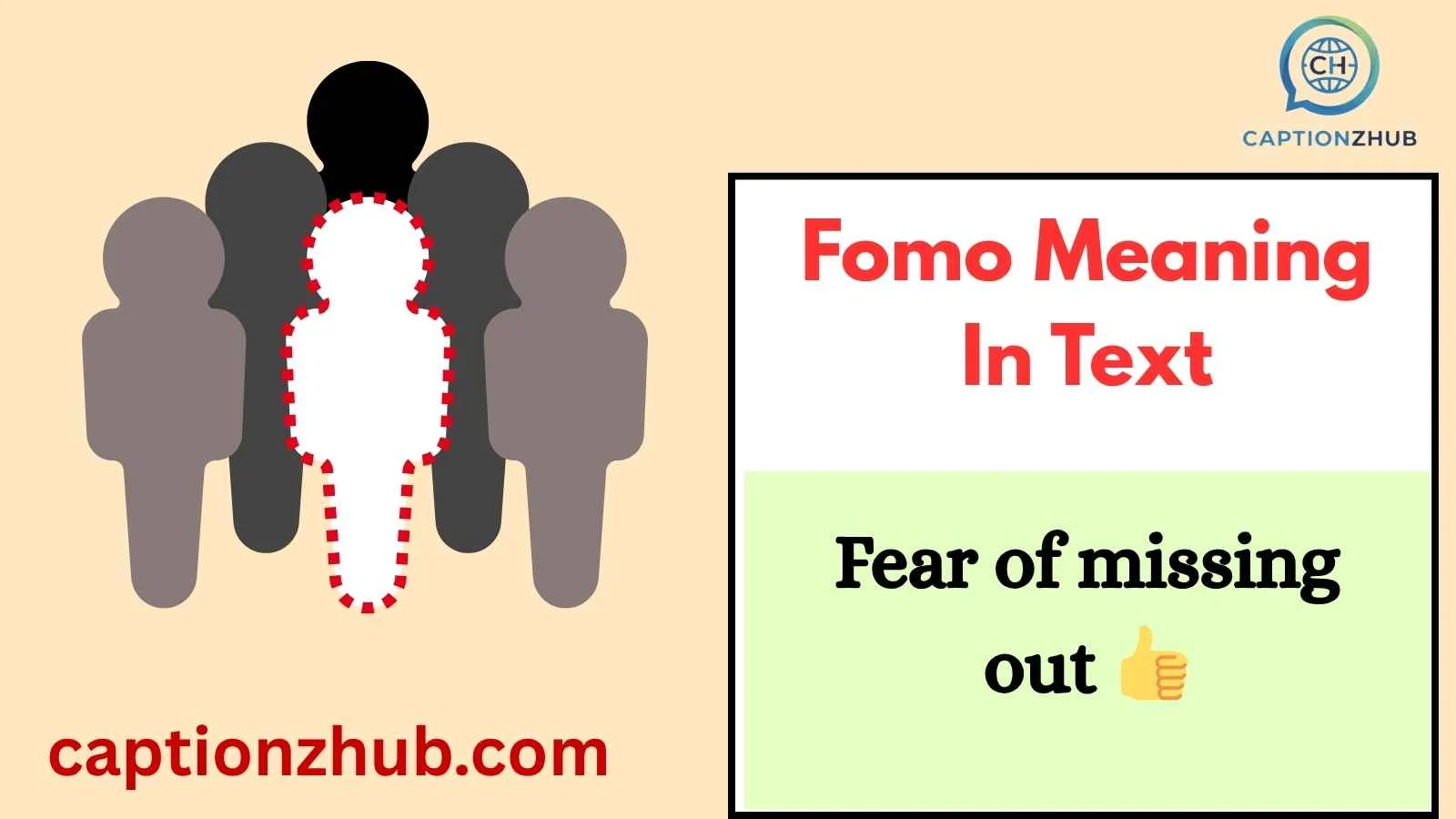
Have you ever seen someone text “I’ve got serious FOMO 😭” and wondered what they really meant? You’re not alone. In today’s fast-moving digital world, understanding slang like FOMO meaning in text is more important than ever. Whether you’re chatting with friends, scrolling social media, or reading messages, this term shows up everywhere.
Now, imagine this: your friends are out having fun, posting stories, laughing, and you’re stuck at home. Suddenly, you feel a strange mix of anxiety and curiosity. That exact feeling is what FOMO represents. It’s not just a word—it’s an emotion millions experience daily.
So, in this complete guide, we’ll break down everything about FOMO meaning in text—from its origin to real-life examples, usage, psychology, and how it affects your daily communication. Let’s dive in! 🚀
What Does FOMO Mean in Text? 🤔
FOMO stands for Fear Of Missing Out. In texting and online conversations, it is used to express the feeling that you might be missing something exciting, fun, or important.
For example:
- “You guys went out without me? I have FOMO now 😩”
- “Everyone is watching that show, I’m getting FOMO”
In simple words, FOMO meaning in text refers to the emotional reaction of feeling left out.
The Origin of FOMO 📚
The term FOMO didn’t start with texting. It actually comes from psychology and marketing. However, it became popular with the rise of social media platforms.
Originally, people used it to describe anxiety caused by missing social events. But now, it has evolved into a common slang used in texting, memes, and everyday conversations.
“FOMO is the anxiety that an exciting or interesting event may currently be happening elsewhere.”
Over time, texting culture adopted it because it perfectly describes modern digital emotions.
Why FOMO is So Popular in Texting 💬
There are several reasons why FOMO meaning in text has become extremely popular:
- Short and catchy: Easy to type and understand
- Relatable: Almost everyone experiences it
- Emotional: Expresses feelings quickly
- Social media influence: Platforms amplify it
Because of these reasons, FOMO is now a part of everyday digital language.
Different Ways FOMO is Used in Text 🧠
People use FOMO in various contexts depending on the situation:
1. Social Events
“You didn’t invite me? FOMO hitting hard 😭”
2. Online Trends
“Everyone is buying this, I’m getting FOMO”
3. Entertainment
“That movie is trending, I have FOMO now”
4. Travel & Experiences
“Your vacation pics gave me FOMO 😍”
As you can see, FOMO meaning in text adapts to many situations.
Examples of FOMO in Real Conversations 📲
Let’s look at realistic texting examples:
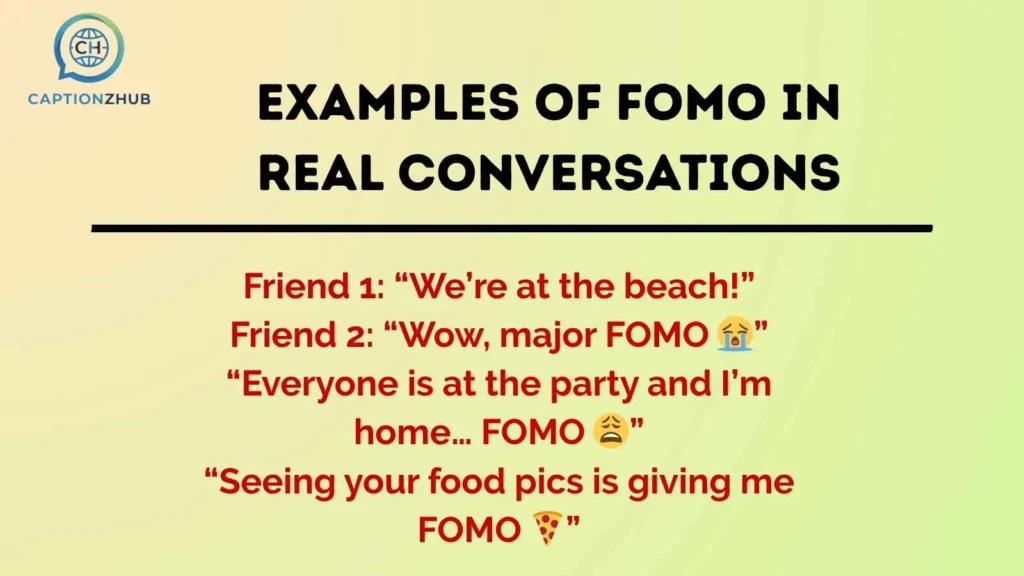
- Friend 1: “We’re at the beach!”
Friend 2: “Wow, major FOMO 😭” - “Everyone is at the party and I’m home… FOMO 😩”
- “Seeing your food pics is giving me FOMO 🍕”
These examples show how naturally FOMO fits into everyday chats.
FOMO vs JOMO: What’s the Difference? ⚖️
| Term | Meaning | Emotion |
|---|---|---|
| FOMO | Fear of missing out | Anxiety 😟 |
| JOMO | Joy of missing out | Peace 😌 |
While FOMO meaning in text focuses on missing out, JOMO celebrates staying in and enjoying your own time.
Psychology Behind FOMO 🧠
FOMO is deeply connected to human psychology. People naturally want to feel included and valued. When they think they’re missing something, it triggers anxiety.
Key reasons include:
- Need for belonging
- Social comparison
- Curiosity
- Fear of regret
That’s why this term is so powerful in texting—it reflects real emotions.
Impact of Social Media on FOMO 📸
Social media plays a huge role in spreading FOMO. Platforms constantly show highlights of people’s lives.
- Perfect vacations
- Fun parties
- Trendy lifestyles
This creates an illusion that others are always having more fun, increasing FOMO.
Is FOMO Always Negative? ❓
Not necessarily. While FOMO meaning in text often reflects anxiety, it can also motivate people.
Positive side:
- Encourages trying new things
- Boosts social interaction
Negative side:
- Causes stress
- Leads to overthinking
Balance is the key.
How to Respond When Someone Says FOMO 💬
If someone texts you “I have FOMO,” here are some friendly responses:
- “Come join us next time!”
- “Don’t worry, we’ll plan something together 😊”
- “You didn’t miss much honestly 😄”
This keeps the conversation positive and inclusive.
Common Variations of FOMO 🔄
People often use variations of FOMO in texting:
- FOBO – Fear of better options
- FOMU – Fear of missing updates
- FOMS – Fear of missing sleep 😴
These variations show how flexible slang language can be.
When Should You Use FOMO in Text? ⏰
Use FOMO when:
- You feel left out
- You see something exciting happening
- You wish you were part of an event
Avoid overusing it, though, as it can lose its impact.
How to Avoid FOMO in Real Life 🧘
If you feel FOMO often, try these tips:
- Focus on your own goals
- Limit social media usage
- Practice gratitude
- Stay present in the moment
This helps reduce unnecessary stress.
FOMO in Pop Culture 🎬
FOMO is everywhere—from movies to memes. It has become a cultural phenomenon.
People even joke about it:
- “Netflix gave me FOMO 😆”
- “Instagram is the home of FOMO”
This shows how deeply it’s embedded in modern life.
FAQs:
1. What does FOMO mean in texting?
It means Fear Of Missing Out, a feeling of being left out.
2. Is FOMO a slang word?
Yes, it’s widely used slang in texting and social media.
3. Can FOMO be positive?
Yes, it can motivate people to try new experiences.
4. Where is FOMO commonly used?
Mostly in texts, social media, and casual conversations.
5. What is the opposite of FOMO?
The opposite is JOMO (Joy of Missing Out).
Final Thoughts: 💡
Understanding FOMO meaning in text helps you stay connected in today’s digital world. It’s more than just slang—it reflects real emotions and social behavior.
While it can sometimes create pressure, it also reminds us how much we value connection and experiences. The key is balance—enjoy what you have without worrying too much about what you’re missing.
If you found this guide helpful, explore more slang meanings and stay updated with modern texting language. 🚀
