
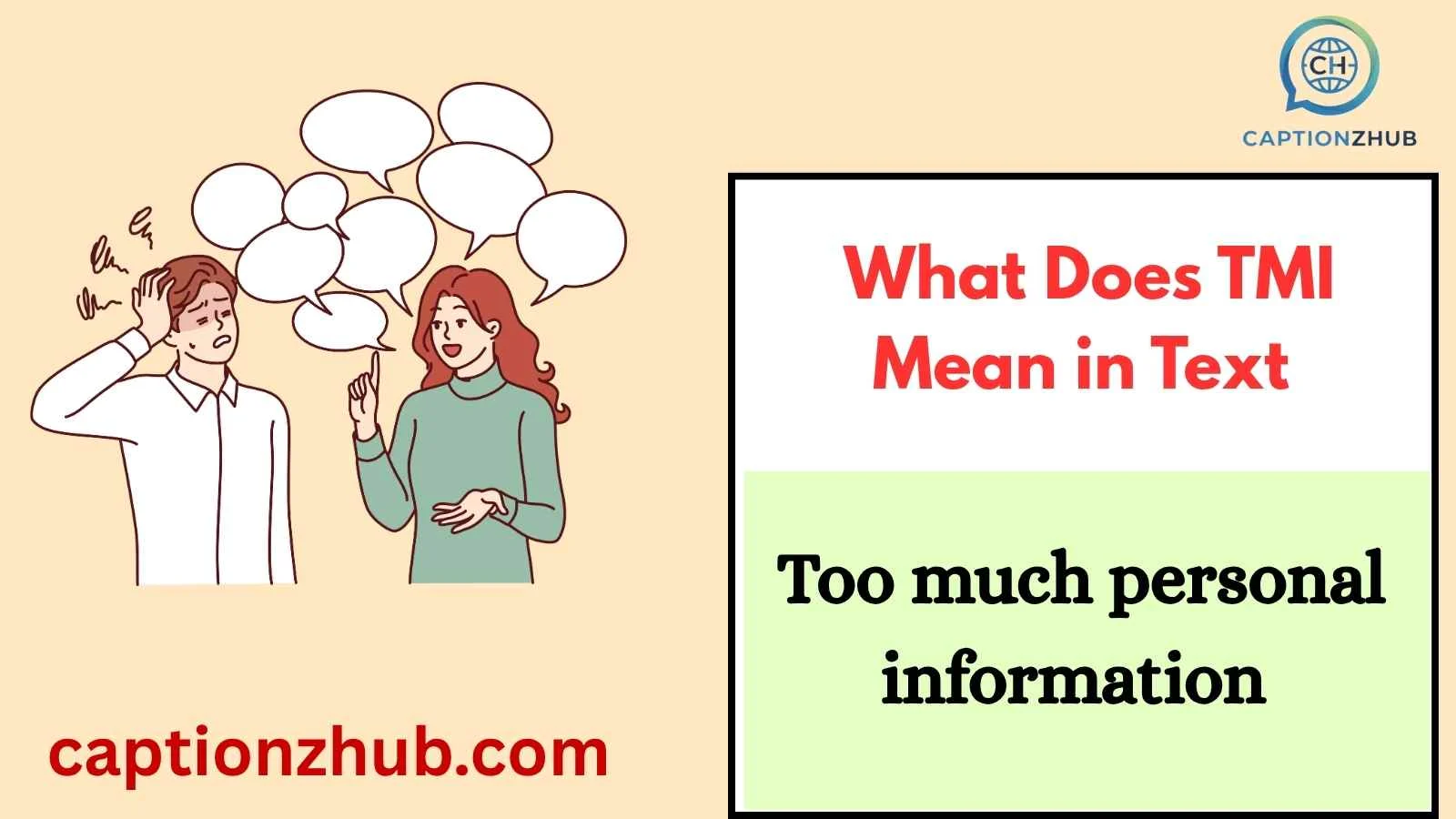
In today’s fast-moving digital world, abbreviations have become a huge part of our daily conversations. One of the most commonly used slang terms you might see online or in chats is TMI. If you are wondering what does TMI mean in text, you are not alone. Millions of people search this phrase every month because internet slang evolves so quickly that even native speakers sometimes struggle to keep up.
Simply put, TMI stands for “Too Much Information.” It is used when someone shares details that are overly personal, unnecessary, or uncomfortable in a conversation. But the real meaning goes much deeper than just three simple words. In texting culture, tone, timing, and context completely change how “TMI” is understood.
In this detailed guide, we will break down everything about TMI—its origin, usage, examples, psychological impact, and even how it fits into modern social media culture. Let’s dive deep into the world of internet slang and decode this popular abbreviation step by step. 🚀
What Does TMI Mean in Text? 🤔
The phrase TMI meaning in text is straightforward on the surface: it stands for “Too Much Information.” However, its usage depends heavily on context. People use it when someone shares details that feel unnecessary or overly personal for the situation.
For example, if a friend starts describing their medical issue in too much detail during dinner, someone might respond with “TMI!” to politely signal discomfort. It is not always rude; often, it is playful, humorous, or light-hearted.
- 💬 Used in texting to show discomfort
- 😅 Can be humorous or sarcastic
- 🚫 Sometimes used to stop oversharing
- 📱 Common in WhatsApp, Instagram, Snapchat chats
“TMI is less about the information and more about the comfort level of the listener.”
The Origin of TMI 📚
The abbreviation TMI didn’t appear overnight. It became popular in the early 2000s when texting culture and internet forums started booming. As people communicated more online, short forms became essential for faster typing.
Originally, “Too Much Information” was just a phrase used in spoken English. However, as digital communication grew, it transformed into the widely recognized acronym “TMI.”
Today, it is part of global internet slang used across platforms like Twitter (X), TikTok, Instagram, and messaging apps. Its evolution shows how language adapts to technology. 🌍
How TMI is Used in Texting 💬
Understanding what does TMI mean in text messages also requires learning how it is used in real conversations. The tone can vary from friendly to slightly awkward depending on the situation.
Examples in Texting
- Friend 1: “I haven’t showered in 3 days.”
- Friend 2: “Okay… TMI 😬”
- “I just got my wisdom tooth removed and it was bleeding everywhere.”
- “Bro… TMI 😂”
In both cases, “TMI” helps set a boundary without sounding too harsh. It is a quick way to say, “That’s more than I needed to know.”
Real-Life Situations Where TMI Is Used 🧠
The use of TMI is not limited to texting. It also appears in real-life conversations. People use it in face-to-face interactions, especially among friends or in casual settings.
- 🍔 Talking too much about food digestion issues
- 🏥 Sharing medical or health details
- 💔 Oversharing relationship problems
- 🧼 Describing hygiene routines in detail
In all these cases, TMI acts as a social filter, helping maintain comfort in conversations.
TMI on Social Media 📲
On social media platforms, TMI meaning in text slang becomes even more dynamic. People often use it in comments or captions when someone overshares personal life updates.
For example, on TikTok or Instagram, if someone posts overly detailed personal content, followers might comment “TMI” as a playful reaction.
It is also commonly used in memes and humorous content where exaggeration is part of the joke. 😆
Tone Variations of TMI 🎭
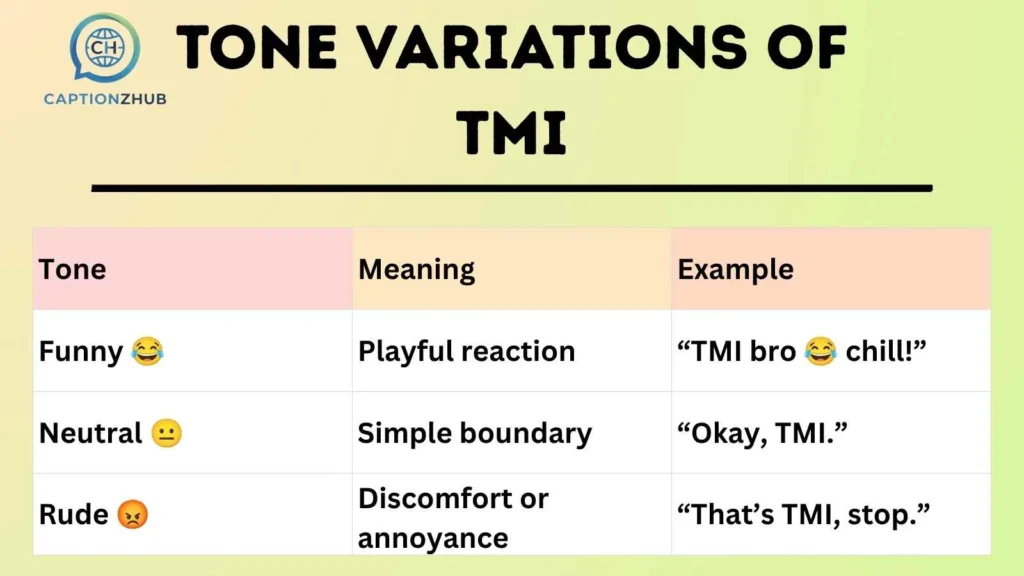
One interesting aspect of TMI is that its meaning changes based on tone. The same word can feel funny, rude, or neutral depending on how it is delivered.
| Tone | Meaning | Example |
|---|---|---|
| Funny 😂 | Playful reaction | “TMI bro 😂 chill!” |
| Neutral 😐 | Simple boundary | “Okay, TMI.” |
| Rude 😡 | Discomfort or annoyance | “That’s TMI, stop.” |
As you can see, tone is everything when interpreting internet slang.
Similar Internet Slang Terms 🔤
To fully understand what does TMI mean in text, it helps to compare it with other popular abbreviations used online.
- LOL – Laugh Out Loud 😂
- OMG – Oh My God 😲
- SMH – Shaking My Head 🤦
- NSFW – Not Safe For Work 🚫
All of these abbreviations, like TMI, are designed to make communication faster and more expressive in digital spaces.
When NOT to Use TMI 🚫
Even though TMI is widely used, there are times when it should be avoided. Using it in the wrong context can hurt feelings or come across as rude.
- ❌ During serious emotional conversations
- ❌ When someone is seeking support
- ❌ In professional or formal communication
- ❌ When the speaker is being vulnerable
Being mindful of context ensures that communication remains respectful and healthy.
Psychology Behind TMI Reactions 🧠
Why do people even say “TMI”? The answer lies in human psychology. Everyone has a personal boundary when it comes to sharing and receiving information.
When someone crosses that invisible boundary, our brain reacts with discomfort. Saying “TMI” is a social way of signaling that discomfort without creating conflict.
“TMI is a social boundary tool that helps maintain emotional comfort in conversations.”
This makes TMI not just slang, but also a reflection of human social behavior.
Cultural Differences in TMI Usage 🌍
The interpretation of TMI meaning in text can vary across cultures. In Western countries, it is commonly used humorously. However, in some cultures, direct expressions like “TMI” may seem impolite.
In global digital communication, these differences are slowly fading as internet culture becomes more universal. Still, understanding cultural context is important when using slang.
Examples of TMI in Conversations 💬
Here are some realistic chat examples to help you understand better:
- “I forgot to brush my teeth for 2 days.” → “TMI 😬”
- “My stomach was making weird noises in class.” → “Bro, TMI 😂”
- “I just explained everything about my breakup.” → “That’s TMI…”
These examples show how flexible and situational the term is.
FAQs:
1. What does TMI mean in text?
TMI means “Too Much Information.” It is used when someone shares overly personal or unnecessary details.
2. Is TMI rude?
Not always. It can be playful or funny, but tone and context decide whether it sounds rude or polite.
3. Where is TMI commonly used?
It is commonly used in texting, social media platforms, and casual conversations.
4. Can TMI be used professionally?
No, it is best suited for informal communication only.
5. Is TMI still popular in 2026?
Yes, TMI remains widely used in internet slang and continues to be relevant in digital communication.
Final Thoughts: 📝
Now you fully understand what does TMI mean in text and how it shapes modern digital communication. It is a simple abbreviation, but it plays an important role in setting conversational boundaries online.
From texting friends to scrolling through social media, TMI helps people navigate oversharing in a quick and humorous way. However, like all slang, it should be used thoughtfully depending on context and tone.
As internet language continues to evolve, expressions like TMI remind us how creativity shapes communication in the digital world. 🌐

Ali Morshedlou is the creative voice behind Captionzhub, turning simple words into fun and relatable content. Known for a natural sense of humor, the writing feels easy, human, and engaging.