
In today’s fast-moving digital world, short messages and quick replies dominate conversations. Whether you’re chatting on WhatsApp, texting a friend, or scrolling through social media, you’ve probably come across the term TTYL. But what does TTYL mean in text, and why is it still so popular even in 2026? 🤔
Simply put, TTYL stands for “Talk To You Later”. It’s a casual and friendly way to end a conversation without sounding rude or abrupt. Instead of typing a full sentence, people use TTYL to save time while still maintaining a warm tone.
However, there’s more to this tiny abbreviation than meets the eye. From its origin to how it’s used across different platforms, understanding TTYL can help you communicate more naturally and confidently online.
What Does TTYL Mean in Texting? 💬
The phrase TTYL (Talk To You Later) is a commonly used texting abbreviation that signals the end of a conversation. It tells the other person that you’re leaving for now but plan to reconnect later.
- It is casual and friendly
- It is used in informal conversations
- It shows intent to continue the relationship
Unlike a simple “bye,” TTYL feels more personal and warm. It implies that the conversation isn’t over forever—just paused.
Quick Definition:
TTYL = Talk To You Later → A casual way to say goodbye for now.
Origin of TTYL 📜

The abbreviation TTYL dates back to the early days of the internet, particularly during the rise of chat rooms and instant messaging platforms like AOL Instant Messenger (AIM) in the late 1990s and early 2000s.
Back then, typing speed mattered. Users wanted to communicate quickly without writing full sentences. As a result, abbreviations like:
- BRB (Be Right Back)
- LOL (Laugh Out Loud)
- TTYL (Talk To You Later)
became extremely popular. Over time, these shortcuts evolved into everyday language, especially among younger users.
Why Do People Use TTYL? 🤔
There are several reasons why people still use TTYL in modern conversations:
- Saves time – Faster than typing full sentences
- Casual tone – Feels friendly and relaxed
- Widely understood – Recognized globally
- Non-final goodbye – Keeps the connection open
Even with voice notes and emojis becoming popular, abbreviations like TTYL remain relevant because they are quick and effective.
How to Use TTYL in Conversations 📱
Using TTYL is simple, but context matters. It’s best used in informal chats with friends, family, or close colleagues.
Examples:
- “I have to go now, TTYL!”
- “Busy right now, talk later 👍 TTYL”
- “Catch you later, TTYL 😊”
Avoid using it in professional or formal communication, such as emails to your boss or official messages.
TTYL vs Other Texting Slang 🔄
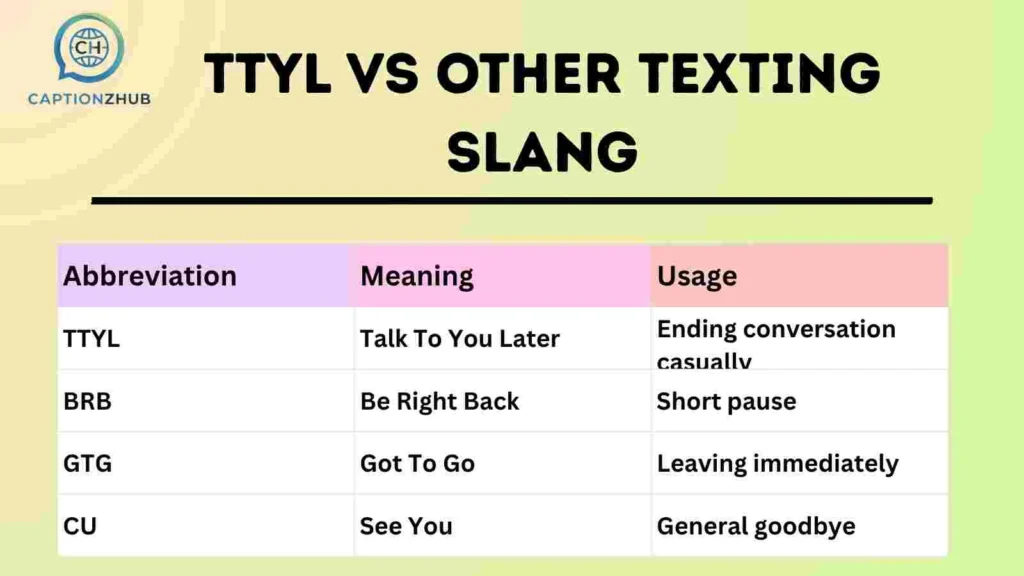
TTYL is just one of many texting abbreviations. Here’s how it compares with similar terms:
| Abbreviation | Meaning | Usage |
|---|---|---|
| TTYL | Talk To You Later | Ending conversation casually |
| BRB | Be Right Back | Short pause |
| GTG | Got To Go | Leaving immediately |
| CU | See You | General goodbye |
While all these phrases indicate leaving, TTYL feels more friendly and less urgent than others.
Is TTYL Still Popular in 2026? 📊
Yes, TTYL is still widely used in 2026. Although newer slang appears constantly, classic abbreviations remain strong due to their simplicity and familiarity.
Modern users often combine TTYL with emojis or other slang, such as:
- TTYL 😊
- TTYL bro
- TTYL ❤️
Its adaptability keeps it relevant across generations.
When NOT to Use TTYL ❌
Even though TTYL is useful, there are situations where it’s inappropriate:
- Formal emails
- Professional communication
- Academic writing
- Serious conversations
In such cases, it’s better to use full phrases like “I will talk to you later.”
Emotional Tone Behind TTYL 💡
One interesting aspect of TTYL is its emotional tone. It conveys:
- Warmth 😊
- Politeness
- Continuity
Unlike abrupt endings, TTYL softens the conversation and keeps it friendly.
Real-Life Usage Examples 🌍
Here are some realistic situations where TTYL is used:
- Chatting with friends before sleeping
- Ending a gaming session
- Leaving a casual group chat
- Ending a quick social media conversation
“Alright, I need to finish my work. TTYL!”
TTYL in Social Media 📲
On platforms like Instagram, Snapchat, and WhatsApp, TTYL is commonly used in:
- Direct messages
- Comments
- Stories replies
It often appears alongside emojis to add personality and emotion.
Common Variations of TTYL 🔄
Over time, users have created variations of TTYL:
- TTYS – Talk To You Soon
- TTFN – Ta-Ta For Now
- CUL8R – See You Later
These variations offer slightly different tones but serve a similar purpose.
Psychology Behind Using Short Texts 🧠
People use abbreviations like TTYL because they:
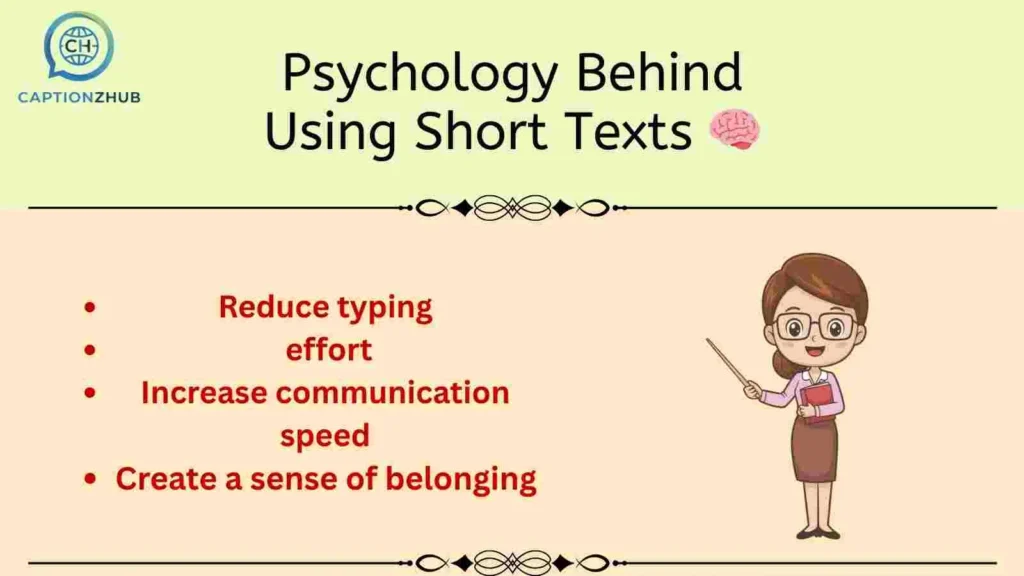
- Reduce typing effort
- Increase communication speed
- Create a sense of belonging
Interestingly, using slang also signals that someone is part of a digital culture or community.
FAQs:
Is TTYL rude?
No, it is polite and friendly when used in casual conversations.
Can I use TTYL in professional chats?
No, it’s best to avoid it in formal communication.
Is TTYL outdated?
No, it is still widely used and understood.
What is the full form of TTYL?
TTYL stands for Talk To You Later.
Can TTYL be used with emojis?
Yes, it is often combined with emojis to express emotions.
Conclusion:✨
Now you clearly understand what does TTYL mean in text and how to use it effectively. It’s a simple yet powerful abbreviation that keeps conversations friendly and smooth.
As digital communication continues to evolve, terms like TTYL remain essential tools for quick and meaningful interaction. Whether you’re chatting with friends or ending a casual conversation, TTYL helps you stay connected without effort.
